For Parkster, the problem was unmistakable: The app rarely appeared in unpaid search results. Users encountered different descriptions and inconsistent imagery, ended up with competitors, or had to be guided to the app via ads. Below, we show which specific issues we addressed and the effects this achieved.
The Challenge
In Germany, the app often remained invisible for relevant search queries. Instead of Parkster, searchers found well-known competitor solutions or clicked on advertisements to reach their goal. This directly led to lost organic growth and missed users.
Our Solution
- Relaunch and migration with Finaldream: We migrated the website to Statamic and used the relaunch to streamline the information architecture. Menu navigation and page structure were made more concise, and handover points between the editorial and technical teams were clearly defined, so that content can be maintained in the future without constant coordination rounds.
- Content management and briefings: With binding editorial guidelines and standardized briefing templates, we aligned the tonality, headlines, and image selection. This way, new content will avoid stylistic inconsistencies and appear consistent in the future.
- App store optimization: For the App Store and Play Store, we revised titles, short descriptions, and visual assets, and aligned the phrasing with actual search intentions. The visual coordination of the assets ensures that Parkster is more quickly perceived as a single unit in lists.
- Conversion optimization: We analyzed user paths, eliminated identifiable friction points, and simplified key steps. Calls-to-action were formulated more concisely so that visitors can reach their desired goal more quickly.
The Results
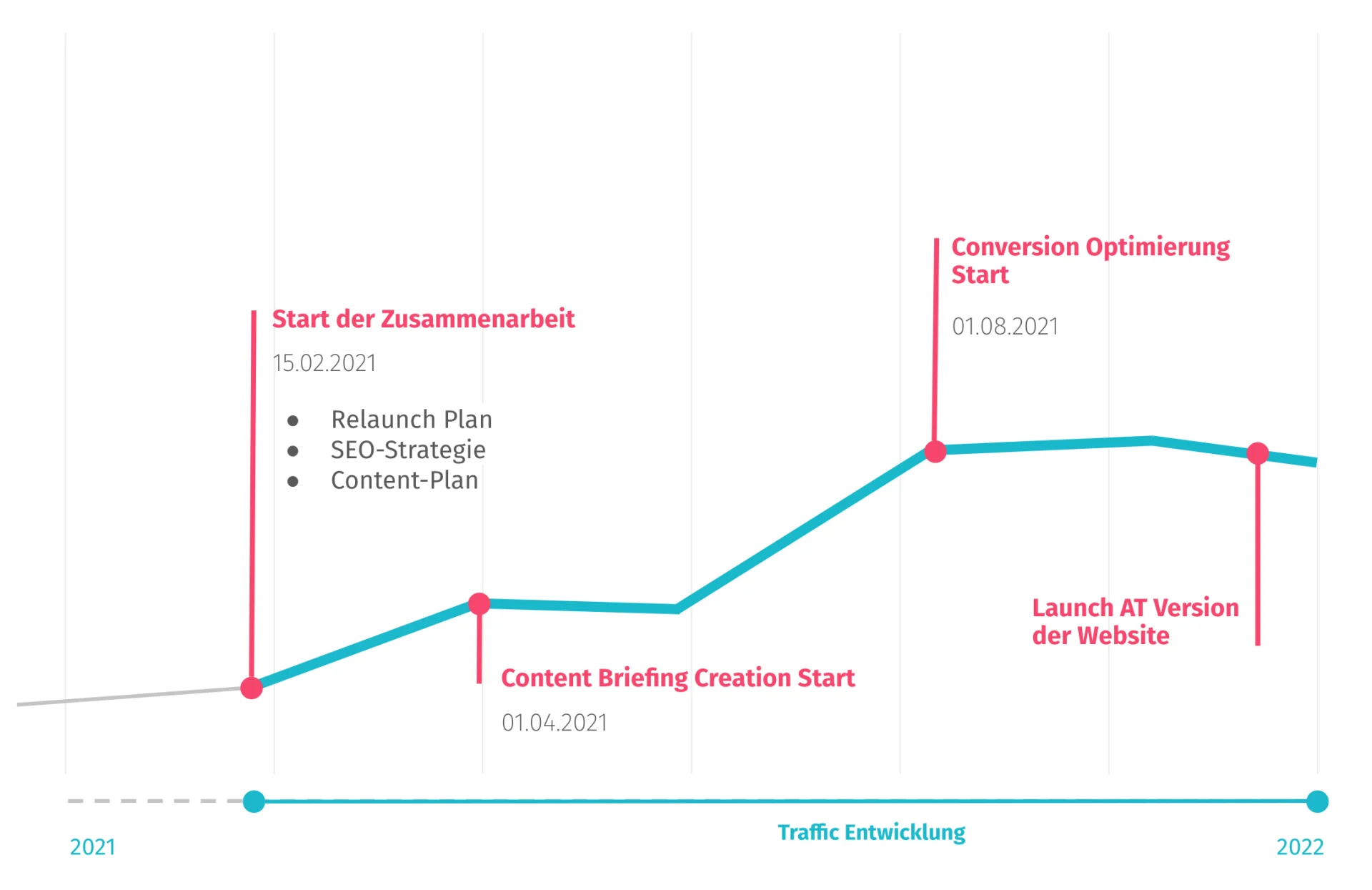
- Within 12 months, organic traffic in Germany increased fivefold.
- Organic traffic in Sweden was doubled.
- The launch in Austria was successful.
- Proven templates and processes are now being systematically transferred to other channels and regions to sustainably scale visibility.